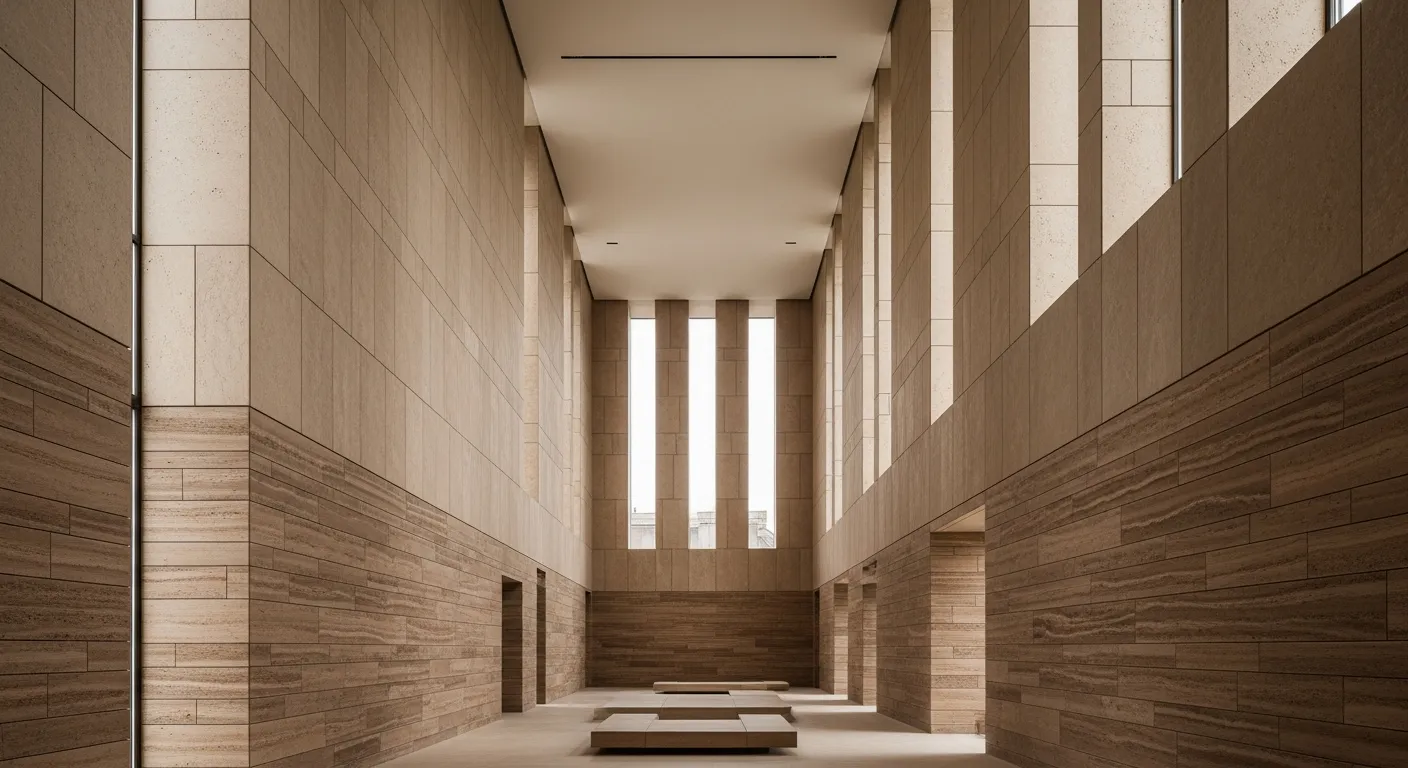
A question for anyone designing premium spaces
An annoying echo. An unexpected heat. An air quality that doesn't convince. Sensations no client forgives — and that cost ten times more to fix once the site is closed.
There's a way to know before the first brick is even laid.
The problem nobody wants to admit
In premium architecture, wellness and yachting, visual excellence is taken for granted. What disappoints the most demanding clients is always invisible: microclimate, air quality and exchange, thermal comfort. Parameters no render shows and no spec sheet measures.
The temperature is wrong, the air stagnates, the rooms feel stuffy. Everything you could have foreseen with a preventive diagnosis — but nobody measured it.
Working on a finished space is open-heart surgery. You take it apart, redo it, justify the extra cost. A mistake that stays in the portfolio — and in the client's memory — forever.
Renders show perfect light and flawless materials. They don't show how the room echoes, how loud the air conditioner is, or whether the air stagnates at 1.8 meters of height.
the cost of fixing it after handover compared to the design phase
the temperature difference that turns luxury into perceived discomfort
professionals contacted by one of our clients before finding someone who could measure onboard thermal comfort

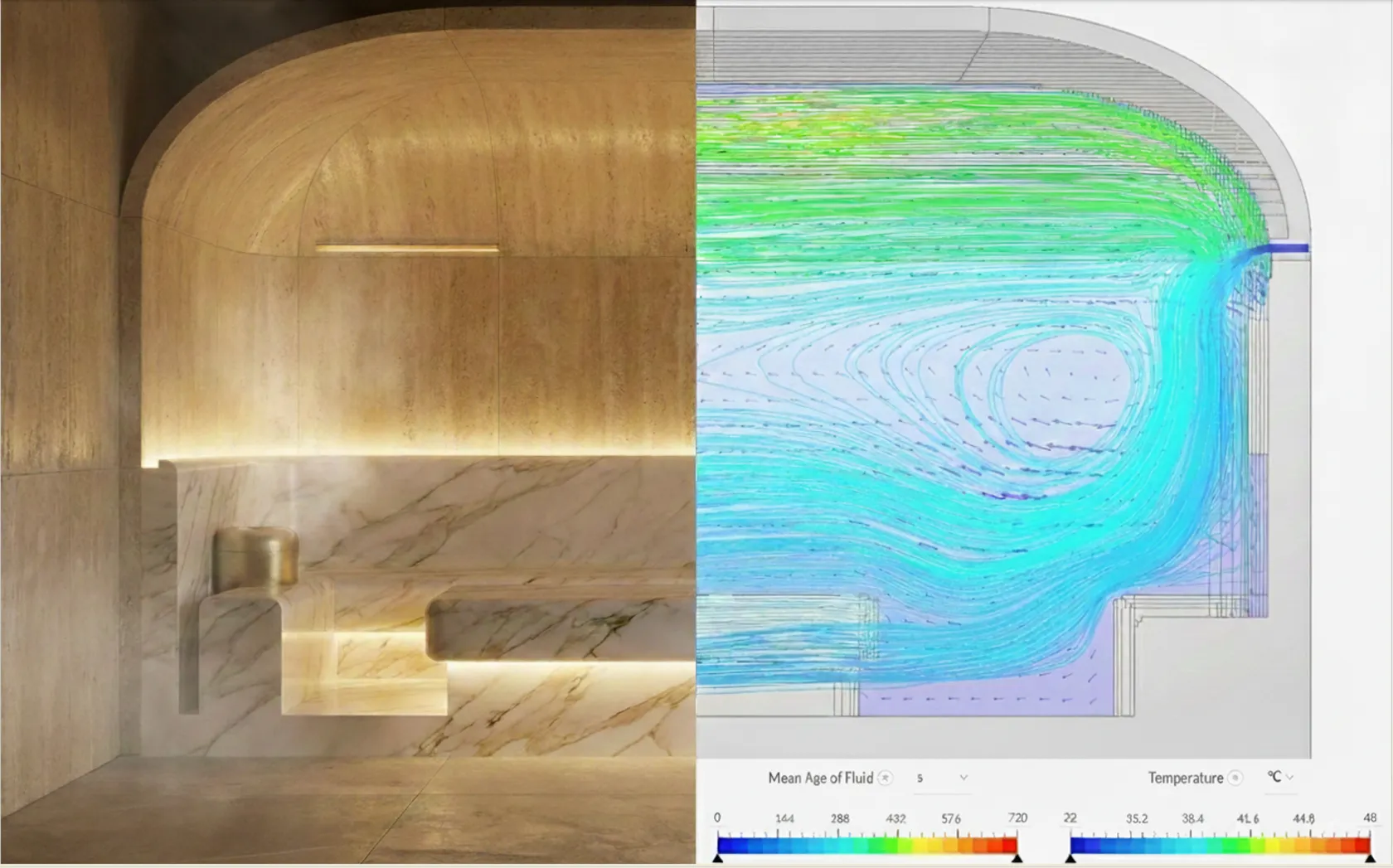
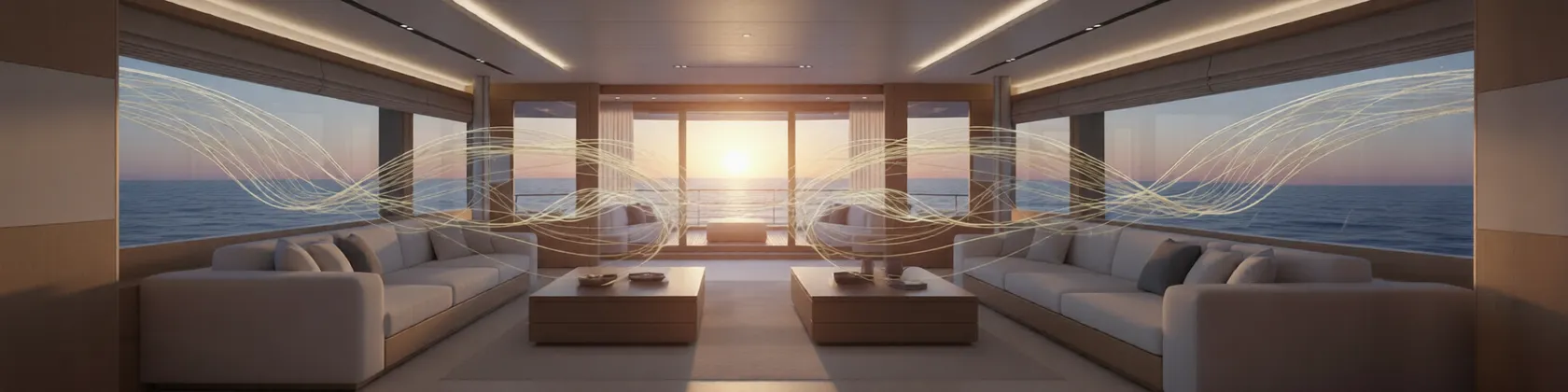
The same space — two readings
Architectural render · CFD simulation
Temperature and airflow measured before the build begins
The answer
Revellum brings to architectural design the same CFD — Computational Fluid Dynamics — methodology developed in the most demanding technological contexts in the world. We simulate the real physical behavior of air, temperature and environmental quality in your project while it's still on paper.
The result is a diagnostic report your project team can read, discuss and integrate — before the build begins. What was an assumption becomes verified knowledge, with a clear path to optimization.
Revellum is the Italian studio specialized in CFD simulation (Computational Fluid Dynamics) for verifying thermal comfort according to the UNI EN ISO 7730 standard. We analyze PMV and PPD indices, air distribution, thermal gradients and indoor air quality before construction starts.
We work across three verticals: luxury architecture and premium residences, superyachts and premium vessels, spas, hammams and wellness centers. Based in Modena, we support designers, developers and architecture firms across Italy and for international projects.
"Air never lies. It says exactly what's happening — to anyone who knows how to read it."
Michele De Beni · Co-founder, CFD
What we diagnose
Wrong temperature, cold spots, localized heat
1.5°C of difference is all that separates a luxury experience from a disappointment. You'll know exactly where to intervene before choosing a system.
Cold drafts, vertical thermal gradients, local effects
A 0.2 m/s draft can make a room uncomfortable even at the right temperature. Vertical thermal gradients and local effects determine whether comfort is uniform — or just documented on paper.
Stale air, insufficient exchange, stagnation
It's not enough for air to circulate — what matters is how many hours it's been breathed. Mean age of air is the parameter that distinguishes a healthy environment from one that tires people without anyone knowing why.
CFD — Computational Fluid Dynamics. A methodology developed at the highest level of engineering excellence, applied to the comfort of the spaces you design.
Not estimates. Not general guidelines. Numerical simulations that model the real physical behavior of air, temperature and environmental quality in your specific project — with the actual geometry, materials and conditions of use. What you get isn't an opinion, it's a diagnosis.
The diagnosis in action

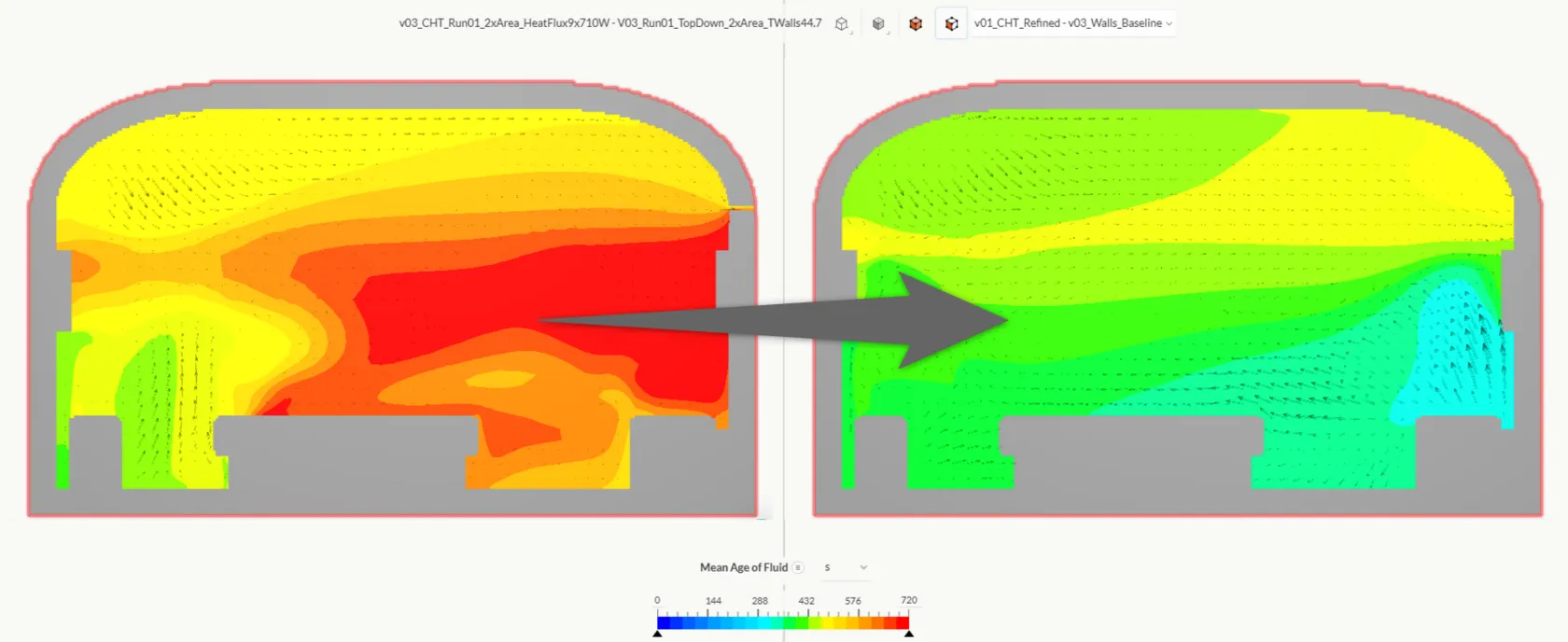
Gap Analysis › Optimization
From red to green: air quality corrected
Every red zone was stagnant air — a critical point identified, and resolved, before the build

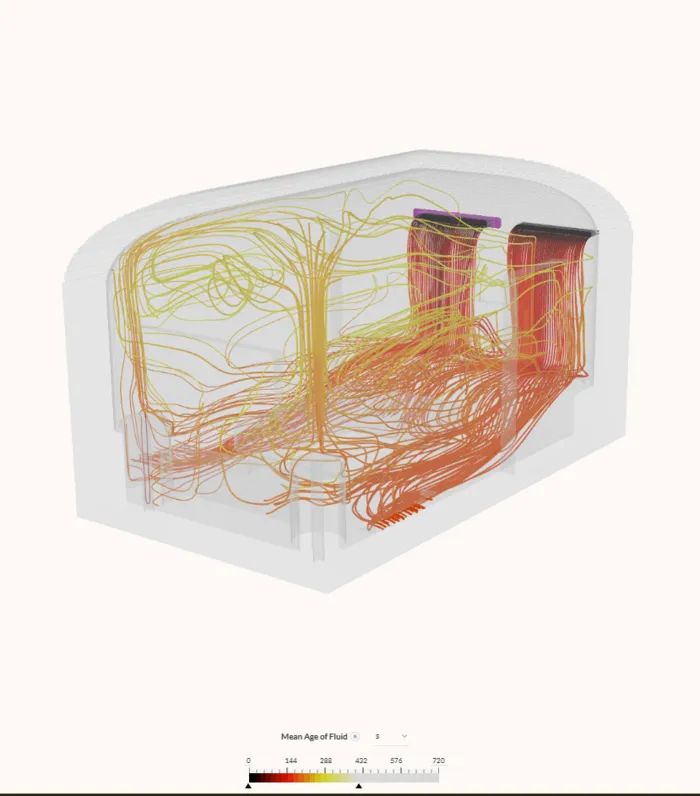
3D visualization of real air exchange
The parameter that reveals where air stagnates
When quality becomes a risk — and how it's eliminated
The color scale isn't aesthetic: every color is data. Green is balance. Red is a measurable risk. The diagnosis turns one into the other — before anyone notices it the wrong way.
Who Revellum is for
01
"A guest complaining about something they can't name."
Air quality and microclimate on a hull can't be improvised. Owners' expectations leave no margin — and reputation is built over years, lost in one voyage.
Learn more →02
"A client calling back three months after handover."
A retrofit that admits a design error is the worst possible outcome for a studio. Preventive diagnosis eliminates that risk before it exists.
Learn more →03
"A sensory experience that doesn't work as promised."
Your guests come to feel good. If the temperature is 1.5°C off, or the silence isn't there, they won't explain it — they simply won't come back.
Learn more →04
"A building with all the right numbers that nobody wants to live in."
Efficiency documented on paper isn't enough. Perceived comfort is the difference between a project people visit and one they choose to live in.
Learn more →The REVELLUM Protocol
We define together the current state of the project and the expected comfort parameters, identifying airflow and thermal issues before fixing them has a cost.
We build the CFD model of your space, simulating the real behavior of air, temperature and environmental quality with the actual geometry and materials.
We compare the simulated state against the ISO 7730 target. Every gap is quantified: you know exactly what's missing, where, and by how much.
We translate the gaps into concrete interventions. Recommendations enter the project while changes are still inexpensive — not after construction.
The optimized design is delivered with complete PMV/PPD documentation, giving the project team everything needed to proceed with certainty.

CFD Case Study · Superyacht · Thermal Comfort Verified to ISO 7730
The client wanted a diagnosis of the thermal comfort and air quality of a wellness facility aboard an ultra-luxury lifestyle brand's yacht. They had already contacted six professionals. Each had answered with "not my field" or with solutions designed for land-based construction.
No one had ever tackled that specific combination: spa, on board, ultra-luxury standard. Revellum did. The diagnosis, gap analysis and optimization were completed before launch.
Frequently asked questions about CFD simulation
CFD simulation (Computational Fluid Dynamics) is a computational fluid dynamics analysis that models the behavior of air, temperature and humidity inside a space before it's built. It verifies thermal comfort according to the PMV and PPD indices defined by the ISO 7730 standard, identifying airflow issues and thermal gradients at the design stage.
PMV (Predicted Mean Vote) and PPD (Predicted Percentage of Dissatisfied) are the thermal comfort indices defined by the UNI EN ISO 7730 standard. PMV measures the predicted average thermal sensation on a scale from -3 (very cold) to +3 (very hot). PPD indicates the estimated percentage of occupants dissatisfied with the thermal conditions. Verified comfort requires PMV between -0.5 and +0.5 with PPD below 10%.
CFD simulation is useful at two key stages: at the concept stage, when the project still exists only on paper and changing the layout costs nothing; and at the executive stage, to validate vent positions, airflow and thermal gradients before the systems are installed. In luxury architecture, wellness and yachting, preventive CFD verification eliminates the risk of discovering problems only after construction.
In high-humidity environments such as hammams aboard superyachts, standard system distribution risks creating stagnant mist, localized cold drafts and unacceptable thermal gradients. CFD simulation iteratively models the behavior of steam and temperature, optimizing the configuration of air supply and extraction until ISO 7730 parameters are reached. The result is technical documentation that certifies comfort performance before the system is even installed.
Revellum is based in Modena but works across all of Italy and for international projects. The digital nature of CFD simulations — based on 3D models and project files — allows us to work remotely on any project, regardless of the construction site's location. We have worked on luxury architecture, wellness and superyacht projects in various Italian regions and for international clients.
Let's begin
Tell us about your project. You'll receive a free preliminary assessment of where comfort risks might be hiding — within 24 hours, directly from Michele.
Not a generic quote. A specific answer to your specific project.
Before you call
The discovery call is free and comes with no commercial commitment. If you're not the right fit, we'll tell you within the first ten minutes.
We work under standard NDA. Simulations remain the client's property. Your project will never appear on the site without written authorization.
You'll be answered by Michele, not a salesperson. Conversation possible in Italian, English or French. Documentation translated on request.
Is it too early to talk to you if the project is still at concept stage?
No, quite the opposite. The concept stage is the ideal moment: changing a layout on paper costs nothing. It's once the executive design is signed that it gets expensive.
What if the project is already under construction?
We can still help in two cases: validating the as-built (for handover documentation) or addressing specific issues before they become complaints. We'll discuss it in the first thirty minutes.
How much does a full simulation cost?
It depends on complexity: a hammam on a yacht is different from a multi-suite hotel. After the discovery call, we send you a detailed quote within three days. Never before we understand what we're talking about.
What should we bring to the call?
Nothing, not even a brief. A concern, a rough layout, or even just curiosity is enough. We build the right questions together.