Case Study
·June 3, 2026
·6 min read
·By Revellum
−35% turbulence. −50% thermal gradient. +60% air exchange. The result of physics applied early.
After optimization, the same hammam. −35% turbulence. −50% thermal gradient. +60% air exchange effectiveness. The numbers tell you what's measured. Not what you feel walking in.
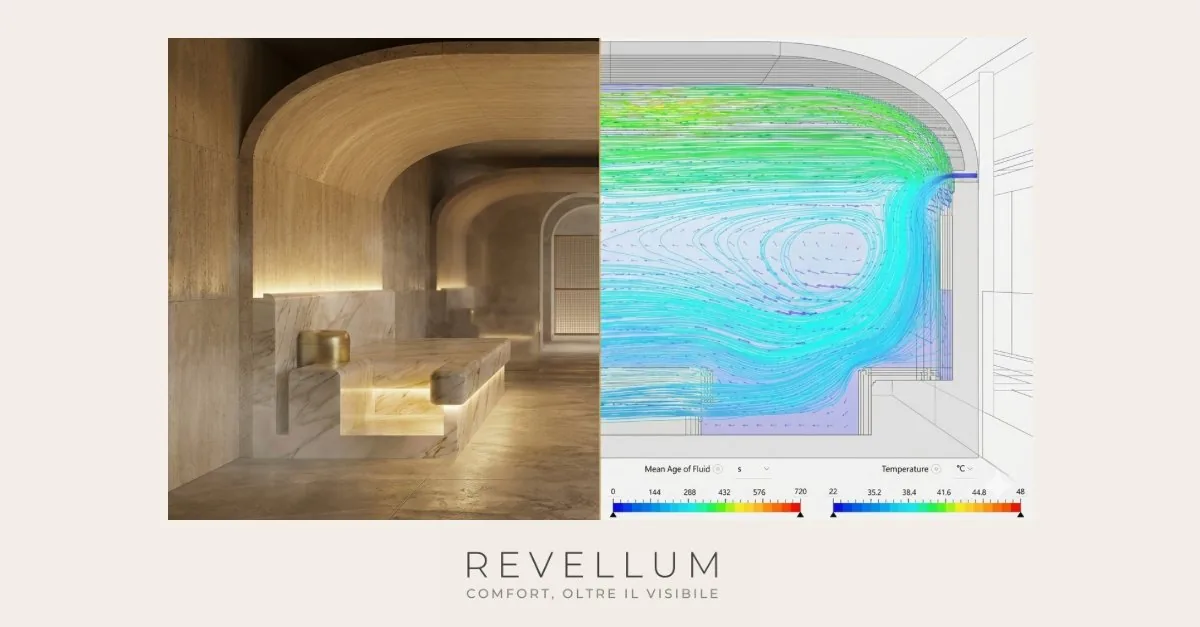
After optimization, the same hammam.
−35% turbulence. −50% thermal gradient. +60% air exchange effectiveness.
But the numbers don't tell the whole story. They tell you what's measured. Not what you feel walking in.
The method: iterative simulations
What we did: iterative simulations. Each cycle improved the configuration of the air supply and extraction. Each cycle answered a precise question: where does turbulence form? Where does the steam stagnate? Where does the vertical thermal gradient exceed ISO 7730 parameters?
What we didn't do: wait for sea trials.
What the data shows
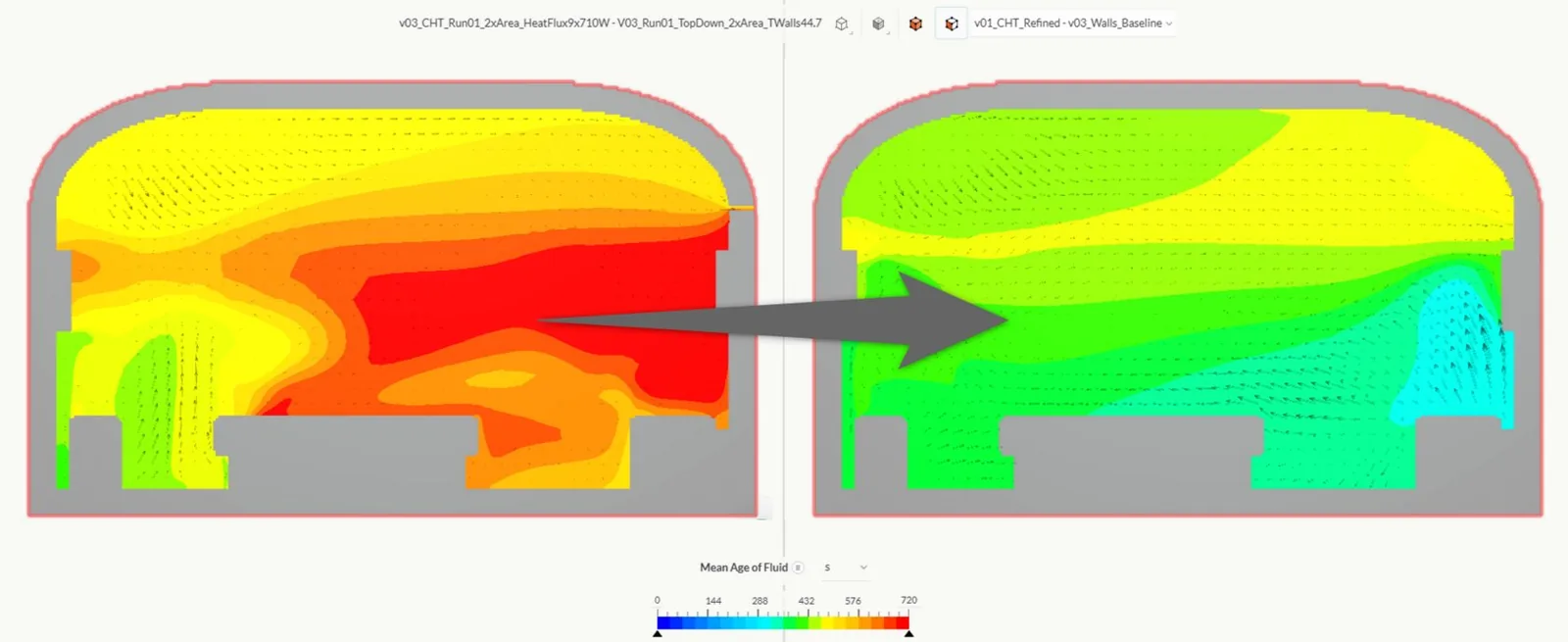
The second chart shows the before/after comparison on the Mean Age of Fluid — the average age of the air. On the left, the initial configuration: the red zones indicate stagnant air, remaining in the space for up to 720 seconds without exchange. On the right, the optimized configuration: uniform distribution, effective exchange at every occupied point.
The velocity field streamlines flow in an orderly way: entering from the upper zone, circulating uniformly, exiting without creating vortices over the seating areas. The thermal map is nearly flat — constant temperature between 35°C and 40°C at every point.
The flat calm of the air. Uniform warmth from skin to walls. The thermal silence you can't explain but feel immediately.
This isn't the result of a better idea. It's the result of physics, applied early.
Related service
CFD for Yachting
Certified onboard thermal comfort for superyachts, before launch.
Related articles